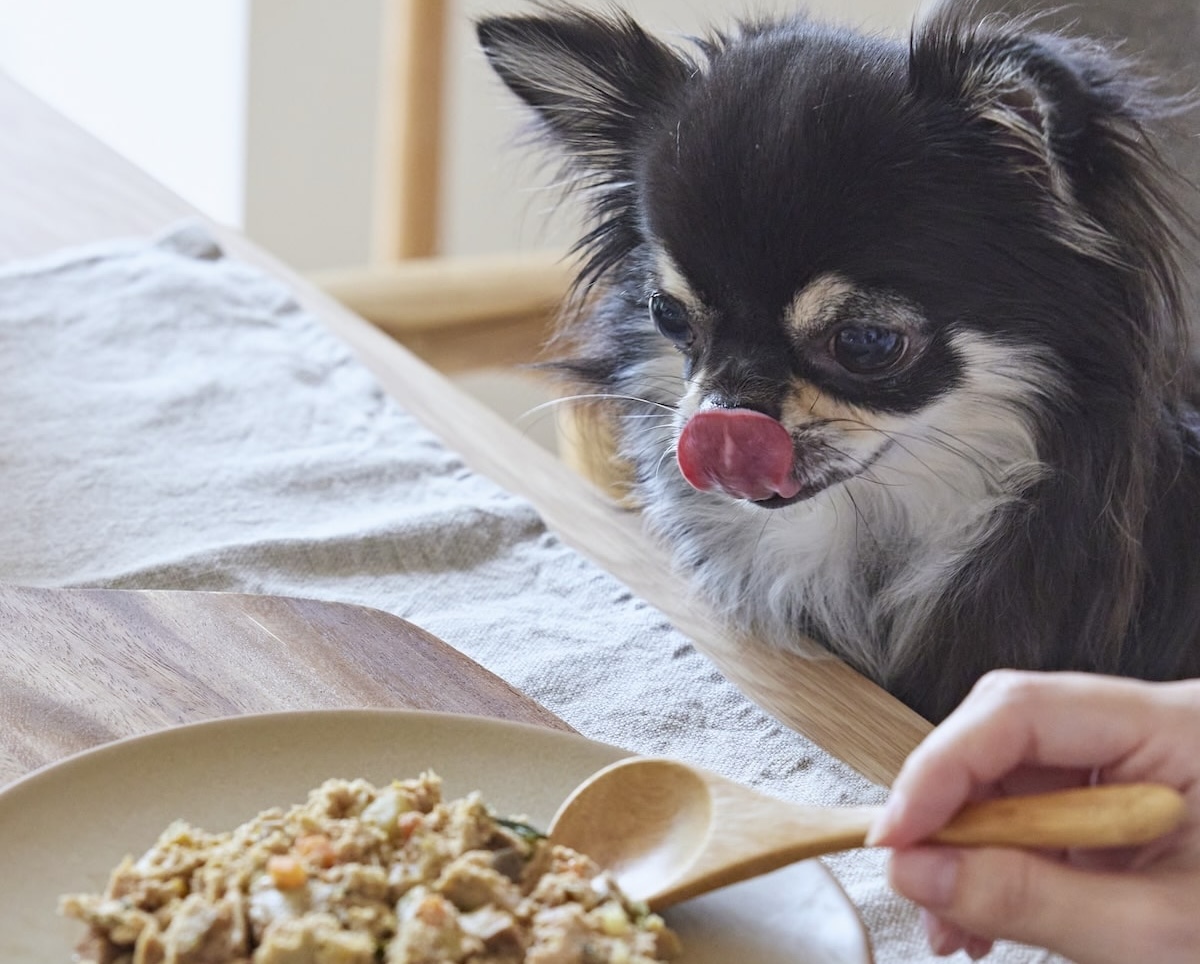
10 things to check before you buy How to Choose Fresh Dog Food
Updated 17 November 2026 · CoCo Gourmet editorial team
More and more fresh dog food brands now deliver in Hong Kong, and the packs all look much the same: fresh meat, colourful vegetables, "human-grade", "natural". This guide sets out what to check before you choose one. It covers the four kinds of fresh dog food on the market, 10 things to look at (drawn from the WSAVA Guidelines on Selecting Pet Foods), how to read the label on a dry matter basis, what research says about processing and digestibility, and which recipe suits puppies, senior dogs, dogs on a diet and dogs with sensitivities.
In short
There is no single best fresh dog food for every dog. For a main meal, first check that the food is labelled complete and balanced (for example to AAFCO or FEDIAF standards) and suits your dog's life stage. Then look at the first ingredient, who formulates the recipe, where the ingredients come from, where and how the food is made and tested, which additives are left out, the calories per 100 g, frozen delivery and storage, and whether you can try a small amount first. The World Small Animal Veterinary Association (WSAVA) advises caution with any brand that cannot or will not tell you who formulates its food, how it controls quality and what its full nutrient analysis is. Finally, choose the recipe for your dog: a mixed set for a first try, a lower-calorie recipe for weight control and a recipe without the meat your dog is sensitive to.
01 Four kinds of fresh food
Four kinds of "fresh dog food": which can be a main meal?
"Fresh dog food" covers products that are stored, made and meant to be fed in quite different ways. Start by checking which kind you are looking at.
| Kind | What it is | Main meal? |
|---|---|---|
| Frozen cooked fresh foodStorage: Frozen | Meat, fish and vegetables cooked and then frozen. Thaw, warm and serve | Yes, if labelled complete and balanced |
| Shelf-stable fresh foodStorage: Room temperature | Cooked, sealed in a can or retort pouch and then sterilised at high temperature and pressure, so it keeps unopened at room temperature | Yes, if labelled complete and balanced |
| Fresh toppersStorage: Frozen or room temperature | Added to kibble or another main food for flavour and moisture; labelled complementary, supplementary or as a topper | No. WSAVA advises keeping these to 10% or less of the diet |
| Raw and freeze-dried rawStorage: Frozen or room temperature | Meat, organs and bones that have not been cooked | Even if complete and balanced, raw meat carries a risk of bacteria |
Home-cooked food is a fifth option, but it is hard to cover every nutrient yourself; see our homemade dog food guide. The five CoCo Gourmet main recipes are frozen cooked fresh food.
02 10 things to check
10 things to check before you choose a fresh dog food
The WSAVA Global Nutrition Committee's Guidelines on Selecting Pet Foods suggest looking at both the brand and the label. Unregulated words such as "holistic" or "premium" tell you little about nutrition. These 10 points bring together that guidance and the questions that matter for fresh food in particular: storage, delivery and trying it first.
- 1Is it labelled complete and balanced?
- For a main meal, choose food labelled complete and balanced and see which standard it meets: AAFCO (the Association of American Feed Control Officials) or FEDIAF (the European pet food industry federation). WSAVA advises that foods labelled complementary, intermittent or for short-term feeding should make up only 10% or less of the diet.
- 2Which life stage is it for?
- Nutrient standards are set for growth and reproduction, and for adult maintenance. Food labelled "for all life stages" is formulated to the growth standard, so puppies can eat it; food labelled for adults only is not suitable for puppies under a year old. For large-breed puppies expected to weigh about 32 kg or more as adults, check the calcium too.
- 3What is the first ingredient?
- Ingredients are listed by weight, heaviest first. Ideally the first one is a named meat or fish (chicken breast, beef) rather than an unnamed "meat" or "by-products". If the first few ingredients are all grains or starches, the share of meat is smaller. The list does not show exact proportions, so ask the brand if you want to know more.
- 4Who formulates the recipe?
- WSAVA suggests asking who develops the recipe (someone with a PhD in animal nutrition, a board-certified veterinary nutritionist or a pet owner), whether the brand employs a qualified nutritionist, and whether it can give you a typical analysis of all essential nutrients. Be cautious with a brand that cannot or will not answer.
- 5What grade are the ingredients, and where are they from?
- Words such as "natural" and "premium" have no fixed meaning. A brand that names each ingredient and where the main ones come from tells you more than adjectives on the front of the pack.
- 6Where and how is it made and tested?
- Does the brand make the food itself ("made by") or use another manufacturer ("made for")? Is it made in a pet food plant or a factory that makes food for people? WSAVA expects quality control before, during and after production, including nutrient analysis of the finished food, toxicology, bacteriology and shelf-life checks.
- 7Which additives are left out?
- "Additive-free" on its own is not enough; look for the list of what is not used: preservatives, colourings, flavourings, antioxidants. Frozen fresh food relies on the freezer, so it has less need for preservatives.
- 8How many calories per 100 g?
- Calories decide how much your dog needs each day. WSAVA notes that only the US requires calories on the label; if they are missing, ask the brand. To compare prices, work out the cost per day (daily calories needed ÷ calories per 100 g × price per 100 g) rather than comparing pack prices: if two packs cost the same but one has half as many calories again per 100 g, your dog needs a third less of it each day.
- 9How is it delivered and stored?
- Frozen fresh food should arrive frozen and go straight into the freezer. Check the shelf life, how soon it must be used after thawing, the pack size and whether it will fit in your freezer.
- 10Can you try it first, and change later?
- Is there a small trial size? Does a trial turn into a subscription automatically? Is there a refund if your dog will not eat it, and for how long? Can you change how often it is delivered, skip a delivery or cancel?
For more detail on ingredients, factories, additives and checks, see our safety and quality page.
03 Reading the label
How to read a fresh dog food label: guaranteed analysis and dry matter
The guaranteed analysis on the back of the pack gives amounts per 100 g as fed, water included. Protein and fat are minimums; fibre, ash and moisture are maximums. Fresh food is about 70–75% water and kibble about 10%, so comparing the label figures directly makes fresh food look low in protein. Convert to a dry matter basis first.
How to convert to dry matter
Dry matter (%) = label figure (%) ÷ (100 − moisture %) × 100
| Food | Protein on label | Moisture | Protein, dry matter |
|---|---|---|---|
| CoCo Gourmet Chicken & Vegetables | 13.1% min | 72.6% max | About 47.8% |
| Kibble (example) | 26% min | 10% max | About 28.9% |
The kibble is an example to show the calculation, not a particular product. Working from label minimums gives a slightly lower figure than a lab analysis; the dry matter values on our recipe pages are analysed values (Chicken & Vegetables: 47.9%).
Four more things to read on the pack
- Ingredients: listed by weight, heaviest first. Check the first few and that every ingredient is named.
- Calories: kcal per 100 g or per pack, which you need to work out the daily amount and the cost per day.
- Nutrition statement: complete and balanced or complementary, which standard, and which life stage.
- Manufacturer and contact details: who makes it and how to reach the brand with questions.
04 Processing and digestibility
Does processing change how well a dog digests its food?
How much of the nutrition a dog can actually digest and absorb also depends on the ingredients and how the food is processed. In a study published in 2021 by the University of Illinois, 12 adult dogs ate each of four commercial foods for 28 days in turn, and the researchers compared digestibility and stool output.
| Food | Protein digestibility | Stool per day |
|---|---|---|
| Extruded kibble | 83.4% | About 96 g |
| Fresh food (chilled, commercial) | 93.6% | About 64 g |
| Human-grade cooked fresh food (2 recipes) | About 92.8% | About 39–48 g |
Dogs eating the kibble also needed more food on a dry matter basis to keep their weight. The authors put the differences down to ingredients, nutrient content and processing.
The study used commercial products sold in the US, not CoCo Gourmet, with 12 dogs fed each food for 28 days. Stool weights are averages as passed (water included). Higher digestibility does not on its own mean a food is healthier, but it is a useful way to compare ingredients and processing.
05 Choosing for your dog
Which fresh food suits your dog? Puppies, seniors, weight control and sensitivities
Once the basics are covered, choose the recipe for the dog in front of you. Here is what to look for in common situations, and which CoCo Gourmet recipes fit.
| Your dog (what to look for) | CoCo Gourmet |
|---|---|
| First time on fresh foodTry a small amount first and switch over about 10 days | The 4-pack trial in the 4-recipe set (one pack each of chicken, pork, fish and venison), or our most popular recipe, Chicken & Vegetables |
| PuppyComplete and balanced for all life stages or for growth; watch calcium for large breeds | All five main recipes are for all life stages. For large-breed puppies, choose any recipe except Fish & Pumpkin |
| Senior (7 and over)Plenty of moisture, easy to chew, appealing smell; see your vet first if your dog has a health condition | Venison & Beets (high protein, low fat). For dogs that need kidney care, Early Kidney Care under your vet's guidance |
| Weight controlA lower-calorie recipe, with portions based on weight and body condition | Beef & Sweet Potato 102 kcal, Venison & Beets 104 kcal, Fish & Pumpkin 105 kcal (per 100 g) |
| Sensitive to chicken or porkRead the full ingredient list, not just the recipe name | No chicken: Pork, Fish, Venison. No pork: Chicken, Fish. Every recipe contains sesame |
| Sensitive stomach or low-fat dietLower fat and a slower switch; follow your vet's advice | Fish & Pumpkin has the least fat of the five. If fat must be limited, Gastrointestinal Care (Low fat, 92 kcal) under your vet's guidance |
| Fussy eaterRotate flavours and warm the food slightly to bring out the smell | Rotate the five recipes. Meat lovers often prefer Pork & Broccoli |
Calories are per 100 g (one pack). Venison & Beets also contains pork; Beef & Sweet Potato also contains chicken and pork. Care recipes are therapeutic diets: please feed them under the guidance of a veterinarian.
Puppy feeding guide Senior dog food guide Dog weight loss guide When your dog will not eat See all recipes
06 How CoCo Gourmet measures up
The 10 points, checked against CoCo Gourmet
Here is how the five CoCo Gourmet main recipes answer each of the 10 points.
| Point | CoCo Gourmet main recipes |
|---|---|
| 01 Complete and balanced | Meet the AAFCO 2016 complete-nutrition standards, so each can be fed on its own as a main meal |
| 02 Life stage | All life stages (formulated to the growth standard), from puppies to senior dogs. For large-breed puppies, choose any recipe except Fish & Pumpkin |
| 03 First ingredient | A named meat or fish in every recipe |
| 04 Who formulates it | Supervised by three experts: a veterinarian, a US L.V.T./pet nutrition adviser and a professor emeritus of Hokkaido University. Our recipe pages publish dry matter values for 40 nutrients |
| 05 Ingredients and origin | Japanese human-grade meat, fish and vegetables, with the main places of origin published |
| 06 Manufacturing and checks | Cooked at low temperature in a factory in Japan that makes meals for people; every product passes five checks before shipping: X-ray, metal detection, sensory, visual and microbial |
| 07 Additives | The frozen packs contain no antioxidants, colour fixatives, pH adjusters, preservatives, colourings, flavourings or seasonings |
| 08 Calories | 102–128 kcal per 100 g; work out the daily amount for your dog with the feeding calculator |
| 09 Delivery and storage | Free frozen delivery to every district in Hong Kong, normally within 3–5 working days. Unopened packs keep for about 18 months at -18°C or below; once thawed, keep in the fridge and use within 48 hours |
| 10 Trial and changes | A one-off 4-pack is HK$200. A subscription comes with a 7-day full refund on the first box, you can change the delivery frequency and recipes, and you can cancel at any time |
This applies to the frozen packs of the five main recipes (Chicken & Vegetables, Pork & Broccoli, Fish & Pumpkin, Venison & Beets, Beef & Sweet Potato). For Retort packs, Care, Dry and treats, see each product's ingredient label.
Feeding calculator Products and prices How to try fresh dog food
07 FAQs
FAQs about choosing fresh dog food
- Which fresh dog food is best? How do I choose?
- No one food suits every dog. First check that it is complete and balanced and suits your dog's age. Then look at the first ingredient, who formulates it, how it is made and tested, the additives and the calories. Finally choose the recipe for your dog: try several flavours at first, pick a lower-calorie recipe for weight control and avoid any meat your dog is sensitive to. All five CoCo Gourmet main recipes meet the AAFCO 2016 complete-nutrition standards, and you can start with a 4-pack trial.
- What should I compare between fresh dog food brands?
- WSAVA suggests asking each brand who formulates its food, whether it employs a qualified nutritionist, how it controls quality, whether it can give you a typical analysis of all essential nutrients and who makes the food. For fresh food, add frozen delivery and storage, the cost per day (based on calories) and the trial and refund terms. A brand that answers these clearly is easier to trust.
- What is the difference between complete and balanced food and a topper?
- Complete and balanced food can be fed on its own, with water, as a main meal; its nutrients meet a standard such as AAFCO or FEDIAF. Complementary or supplementary food and toppers are meant to be fed with a main food and will leave gaps if fed alone for a long time. WSAVA advises that they make up 10% or less of the diet.
- What is the difference between frozen and shelf-stable fresh dog food?
- Frozen fresh food is cooked and then frozen. It needs frozen delivery and freezer space, and once thawed it must be kept in the fridge and used promptly. Shelf-stable packs are sterilised at high temperature and pressure after sealing, so they keep unopened at room temperature, which is handy for travel and storage. Check that either kind is complete and balanced.
- How do I work out what fresh dog food costs per day?
- Cost per day = daily calories needed ÷ calories per 100 g × price per 100 g. Use the feeding calculator to work out your dog's daily calories from its weight, age and body condition. Calories differ between brands, so comparing pack prices alone is misleading. Remember to add any delivery charge.
- Fresh dog food is only 10–15% protein. Is that less than kibble?
- No. Fresh food is about 70–75% water, and the label figures include that water. Compare on a dry matter basis (label figure ÷ (100 − moisture) × 100): CoCo Gourmet Chicken & Vegetables has 13.1% protein and 72.6% moisture, about 47.8% on a dry matter basis, while a kibble with 26% protein and 10% moisture is about 28.9%.
- What does human-grade dog food mean?
- It usually means the ingredients are fit for people to eat. The term has no single definition, so also check whether the brand names its ingredients, where they come from and where the food is made. The five CoCo Gourmet main recipes use Japanese human-grade meat, fish and vegetables and are cooked in a factory in Japan that makes meals for people.
- Is grain-free dog food always better?
- Not necessarily. Grains are not a problem in themselves; what matters more is a complete and balanced claim and whether meat or fish is the main ingredient. The five CoCo Gourmet main recipes are based on meat or fish and contain no wheat, rice or corn.
- Can puppies eat fresh dog food?
- Yes, if it is complete and balanced for all life stages or for growth. The five CoCo Gourmet main recipes are formulated to the AAFCO 2016 growth standard, so weaned puppies can eat them. For large-breed puppies expected to weigh about 32 kg or more as adults, choose any recipe except Fish & Pumpkin and check portions with your vet.
- Can cats eat fresh dog food?
- Dogs and cats need different nutrients; cats, for example, must get enough taurine from their food, and AAFCO sets separate standards for dogs and cats. CoCo Gourmet is formulated to dog standards, so it is not suitable as a cat's main food. For a cat, choose a complete and balanced food made to cat standards.
- How do I switch my dog to fresh food?
- Take about 10 days: 25% fresh food on days 1–3, 50% on days 4–6, 75% on days 7–9 and 100% from day 10. Watch stools, appetite and energy, and give dogs with a sensitive stomach a few extra days at each stage.
- Where can I buy fresh dog food in Hong Kong?
- CoCo Gourmet frozen fresh food can be ordered on the official website, with free frozen delivery to every district in Hong Kong, normally within 3–5 working days. One-off packs are also available from our HKTVmall store and from pet shops, veterinary clinics and cafés that stock CoCo Gourmet. A one-off 4-pack is HK$200; a 12-pack subscription is HK$330 (54% off, HK$27.5 per pack).
Sources
1. WSAVA Global Nutrition Committee. Guidelines on Selecting Pet Foods (updated 10 March 2021).
About CoCo Gourmet
CoCo Gourmet is fresh dog food from Japan. The five main recipes are vet-supervised, complete and balanced to AAFCO 2016 standards and made in a human-food factory in Japan, then delivered frozen in 100 g packs with free delivery to every district in Hong Kong, normally within 3–5 working days. A one-off 4-pack is HK$200; a 12-pack subscription is HK$330 (54% off, HK$27.5 per pack). If your dog does not like the first box, you can get a full refund within 7 days.
Order the first box (7-day money-back) What is fresh dog food?

12-pack subscription
50%OFF
$14~/meal