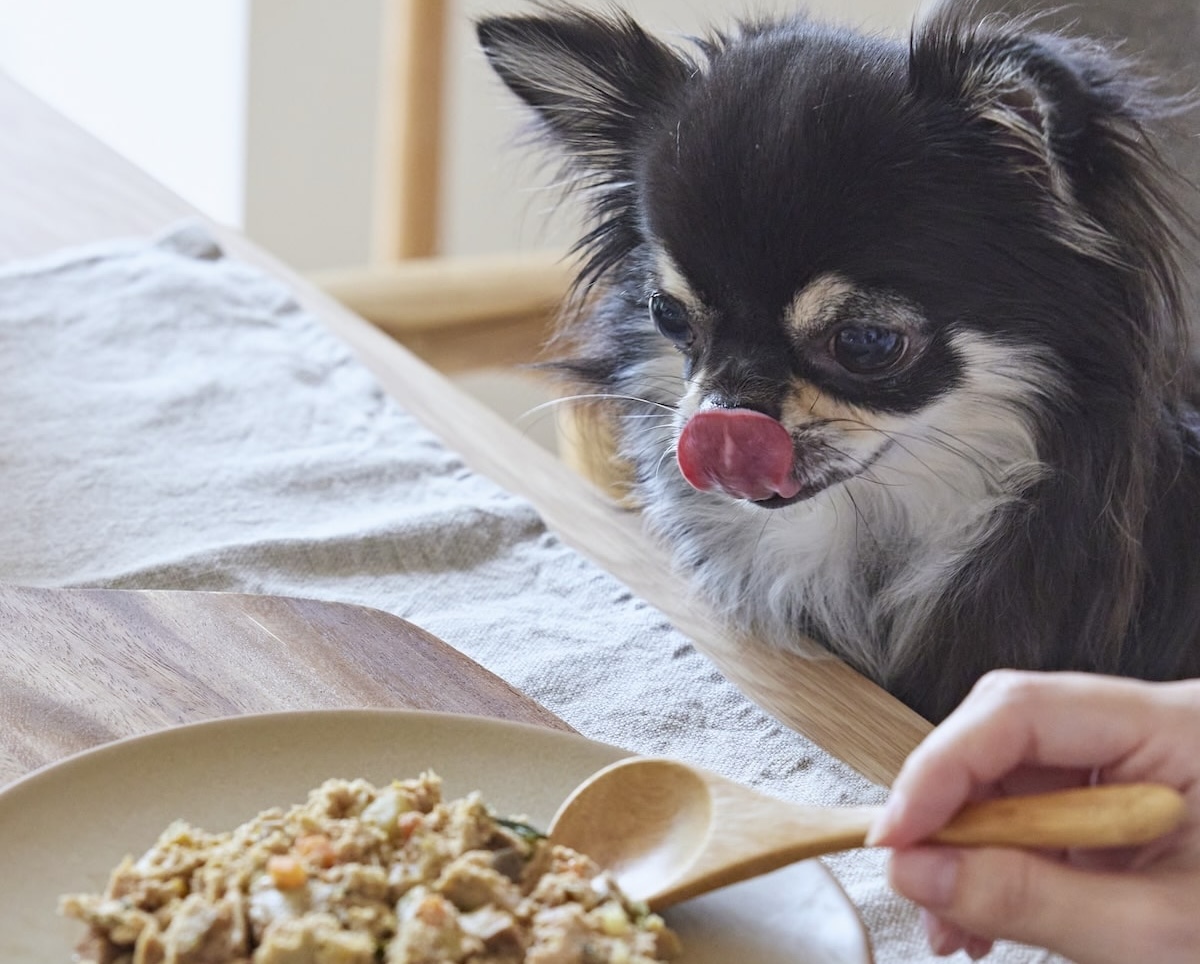
BARF, freeze-dried raw and cooked fresh food compared Raw Dog Food Guide
Updated 15 November 2026 · CoCo Gourmet editorial team
Raw dog food (raw feeding, BARF) is talked about more and more in Hong Kong. Some owners report a shinier coat and smaller stools; vets and public health agencies warn about bacteria. This guide sets out the types of raw dog food, what the research says about the claimed benefits, the three kinds of risk, which homes and dogs should avoid it and how to handle it safely if you do feed it. It then compares raw food with gently cooked fresh food, which uses the same kind of fresh ingredients but is already cooked.
In short
Raw dog food is made from uncooked meat, organs and bones, usually with vegetables. It includes home-made raw diets (BARF), frozen raw meals and freeze-dried raw. Supporters see it as closer to what dogs ate originally, but the World Small Animal Veterinary Association (WSAVA) says there is currently no properly documented evidence of health benefits, while the risks are well documented: raw meat can carry Salmonella, Listeria and other bacteria, and freezing or freeze-drying does not kill them all; home-made raw diets are often unbalanced; and bones can damage teeth and the gut. The US Centers for Disease Control and Prevention (CDC) does not recommend feeding raw pet food to dogs and cats. Avoid it in particular if you live with children under 5, adults aged 65 or over, anyone who is pregnant or has a weakened immune system, or if your dog is a puppy or unwell. If what you want is fresh ingredients, a complete and balanced fresh food that is already cooked gives you those without raw meat to handle.
01 What is raw dog food?
What is raw dog food? BARF, frozen raw and freeze-dried raw
Raw dog food is dog food made from meat, organs and bones that have not been cooked. It is also called raw feeding or BARF (Biologically Appropriate Raw Food, or Bones and Raw Food). Three kinds are common in shops and at home.
| Type | What it is | Watch out for |
|---|---|---|
| Home-made raw (BARF)Storage: Chilled or frozen | Raw meat, meaty bones, organs, fruit and vegetables that you put together yourself | You have to work out the nutrition, and you handle raw meat when shopping, cutting and portioning |
| Frozen raw mealsStorage: Frozen | Raw meat, organs, bone and vegetables minced into patties or nuggets | Freezing does not kill all bacteria; check whether the product is complete and balanced |
| Freeze-dried rawStorage: Room temperature | Raw meat frozen and then dried in a vacuum, sold as meals and as treats | Freeze-drying only reduces bacteria; it is not the same as cooking |
Dehydrated raw products (dried with warm air) have not been heated enough to kill germs either. Some brands use high-pressure processing (HPP) or other steps without heat to reduce bacteria; ask the brand what it does and whether each batch is tested.
Raw dog food and "fresh dog food" are often confused. Both use fresh meat and vegetables and are high in moisture. The difference is that fresh dog food is cooked and raw dog food is not.
02 Raw vs cooked fresh vs kibble
Raw dog food, gently cooked fresh food and kibble compared
The biggest difference between the three is whether the food is cooked. That affects the risk from bacteria, how the food is stored and how much care daily handling needs.
| Compare | Raw dog food | Gently cooked fresh food | Kibble |
|---|---|---|---|
| Cooking | None | Cooked, then frozen | Processed at high heat into pellets |
| Moisture | High (except freeze-dried) | About 70–75% | 10% or less |
| Bacteria | Raw meat can carry Salmonella, Listeria and others | Cooked; once thawed, keep chilled and use promptly | Cooked; keep dry after opening |
| Nutrition | Home-made: you work it out. Ready-made: check for a complete and balanced claim | Check for a complete and balanced claim | Check for a complete and balanced claim |
| Storage | Frozen (freeze-dried: room temperature) | Frozen | Room temperature |
| Daily handling | Thawing, portioning and cleaning all need care to avoid cross-contamination | Thaw and warm | Simplest |
Moisture and storage vary by product. CoCo Gourmet is a gently cooked fresh food; the five main recipes are about 70–75% moisture.
03 Claimed benefits
Benefits of raw dog food: what supporters say and what the research shows
Owners who choose raw dog food most often mention the following.
- A shinier coat
- Smaller, firmer stools
- Cleaner teeth
- A better appetite
- Closer to what dogs ate originally
Most of these are what owners have observed. The WSAVA Global Nutrition Committee states that there is currently no properly documented evidence of health benefits for raw meat-based diets, but there are well documented risks, and it recommends that they not be fed to dogs and cats.
The features that make raw dog food attractive (fresh meat and vegetables, plenty of moisture, no high-heat drying into pellets) are not unique to raw feeding. Cooked fresh food has them too. In other words, if what you want is fresh ingredients and moisture, the food does not have to be raw.
04 Three kinds of risk
Three kinds of risk with raw dog food: bacteria, nutritional imbalance and bones
The risks that vets and public health agencies warn about fall into three groups.
Risk 1
Bacteria and parasites
Raw meat can carry bacteria such as Salmonella, Listeria and E. coli, and parasites such as Toxoplasma. A dog may vomit or have diarrhoea, or may show no signs at all and still pass the germs to people and other animals in the home. The person handling the meat, the bowls and the worktop are contaminated in the same way.
Risk 2
Nutritional imbalance
In raw diets that owners put together themselves, calcium, phosphorus, iodine, zinc and vitamins easily end up too high or too low. Ready-made raw products may or may not be complete and balanced, so check the label before feeding one as a main meal.
Risk 3
Bones
WSAVA notes that if bones are included there is a risk of constipation, diarrhoea, dental fractures and gastrointestinal obstruction.
The numbers: how often raw pet food tested positive for bacteria
| Study | Result |
|---|---|
| US FDA (2010–2012)196 samples of raw dog and cat food | 15 positive for Salmonella and 32 for Listeria monocytogenes |
| Same study480 samples of dry and semi-moist food | Only 2 positive (1 Salmonella, 1 Listeria species) |
| Utrecht University and others, the Netherlands (2018)35 frozen raw products from 8 brands | Listeria monocytogenes in 19 (54%), Salmonella in 7 (20%), E. coli O157:H7 in 8 (23%), Toxoplasma in 2 (6%) |
The US Centers for Disease Control and Prevention (CDC) notes that freezing, freeze-drying and dehydrating raw meat only reduce the amount of germs; they do not kill them all.
Study: six in ten home-made raw diets were unbalanced
A German study used questionnaires completed by owners to calculate the nutrient content of 95 bone and raw food diets for adult dogs. Sixty per cent had at least one significant imbalance: too little calcium, a calcium to phosphorus ratio that was too low, or too little vitamin D, iodine, zinc, copper or vitamin A. One in ten supplied less than a quarter of the recommended calcium, and about half supplied less iodine than the minimum requirement.
05 Who should avoid it
Which homes and dogs should avoid raw dog food?
The CDC lists the people below as more likely to become seriously ill. If any of them live in your home, or your dog is in the second group, raw dog food is best avoided.
People
If you live with
- Children under 5
- Adults aged 65 or over
- Anyone who is pregnant
- Anyone with a weakened immune system
Dogs
If your dog is
- A puppy
- Immunocompromised, or has another health condition
Where veterinary and public health bodies stand
| Organisation | Position |
|---|---|
| US Centers for Disease Control and Prevention (CDC) | Does not recommend feeding raw pet food or treats to dogs and cats |
| American Veterinary Medical Association (AVMA) | Discourages feeding any raw or undercooked animal-sourced protein (meat, poultry, fish, egg, milk) to dogs and cats because of the risk to human and animal health |
| WSAVA Global Nutrition Committee | Recommends that raw meat-based diets not be fed to dogs and cats |
| US Food and Drug Administration (FDA) | Found raw pet food more likely than the other pet foods it tested to carry disease-causing bacteria |
Whether to feed raw is for each owner to decide. If you still want to, talk to your vet first and follow the hygiene steps in the next section.
06 Safe handling
If you do feed raw: eight rules for safe handling
These points are drawn from the advice the US FDA and CDC give to pet owners.
-
01
Keep it frozen. Store raw dog food in the freezer and thaw only what you are about to use.
-
02
Thaw in the fridge. Thaw in the fridge or microwave, never on the worktop or in the sink. Hong Kong summers are hot, which makes thawing at room temperature riskier still.
-
03
Do not rinse raw meat. Rinsing splashes bacteria onto the sink and nearby surfaces.
-
04
Store it separately. Keep raw dog food in a sealed container, away from food for people.
-
05
Wash your hands. Use soap and water for at least 20 seconds after handling raw food, and after touching bowls and utensils that held it.
-
06
Clean, then disinfect. Wash bowls, chopping boards, knives and worktops with hot soapy water after each use, then disinfect them.
-
07
Deal with leftovers at once. Cover and refrigerate what your dog leaves straight away, and throw away anything that has sat at room temperature.
-
08
No face licking after meals. Do not let your dog lick your face, mouth or any broken skin right after eating. If it does, wash the area.
These steps lower the risk; they do not make raw meat free of germs. If your dog vomits, has diarrhoea, goes off its food or seems unusually tired after eating raw food, contact your vet and mention the raw food.
07 Cooked fresh food
Fresh ingredients without feeding raw: gently cooked fresh food
If what matters to you is fresh meat, ingredients you can see and plenty of moisture, rather than rawness itself, a fresh food that is already cooked is another option. There is no raw meat to handle: thaw, warm and serve.
How CoCo Gourmet is made
- Cooking
- Cooked at low temperature in a factory in Japan that makes meals for people, with time and temperature controlled at each step
- Checks
- A second sterilisation step, then five checks on every product before shipping: X-ray, metal detection, sensory, visual and microbial
- Nutrition
- The five main recipes are vet-supervised and complete and balanced to AAFCO 2016 standards for all life stages
- Moisture
- About 70–75%
- Storage
- Frozen quickly after cooking. Unopened packs keep for about 18 months at -18°C or below; once thawed or opened, keep in the fridge and use within 48 hours
- Feeding
- Thaw and warm to about body temperature. No raw meat to handle
Moving from raw to cooked fresh food
Change gradually, increasing the share of fresh food over about 10 days, and watch stools, appetite and energy as you go.
| Days | Current food | Fresh food |
|---|---|---|
| Days 1–3 | 75% | 25% |
| Days 4–6 | 50% | 50% |
| Days 7–9 | 25% | 75% |
| From day 10 | 0% | 100% |
What is fresh dog food? Safety and quality See all recipes How to try fresh dog food
08 FAQs
FAQs about raw dog food
- What is raw dog food? Is it the same as BARF?
- Raw dog food is dog food made from uncooked meat, organs and bones, usually with vegetables. BARF is one way of doing it, in which the owner puts together raw meat, meaty bones, organs, fruit and vegetables. Ready-made frozen raw meals and freeze-dried raw products are also sold.
- Can dogs eat raw meat?
- A dog that eats raw meat will not necessarily become ill, but raw meat can carry Salmonella, Listeria and other bacteria, and a dog with no signs of illness can still pass the germs to people and other animals in the home. The US Centers for Disease Control and Prevention (CDC) does not recommend feeding raw pet food to dogs and cats, and the American Veterinary Medical Association (AVMA) discourages it. If you want your dog to eat fresh meat, cooking it first kills these bacteria.
- What are the risks of raw dog food?
- There are three main kinds. First, bacteria and parasites, which are a risk to the dog and to the people handling the food. Second, nutritional imbalance: a German study calculated the nutrients in 95 bone and raw food diets for adult dogs and found at least one significant imbalance in 60% of them. Third, bones, which can cause dental fractures, constipation and gastrointestinal obstruction.
- Does freezing or freeze-drying kill the bacteria in raw meat?
- Not completely. The CDC notes that freezing, freeze-drying and dehydrating only reduce the amount of germs on raw meat. A Dutch study tested 35 frozen raw products and found Listeria monocytogenes in 54% and Salmonella in 20%.
- Is raw dog food really better for the coat, teeth and digestion?
- Many owners report this, but the WSAVA Global Nutrition Committee states that there is currently no properly documented evidence of health benefits for raw meat-based diets, while the risks are well documented. Fresh ingredients and plenty of moisture are not unique to raw feeding; cooked fresh food has them too.
- Can puppies or senior dogs eat raw dog food?
- The CDC notes that puppies, and pets with a weakened immune system or other health conditions, are more likely to get sick from germs in raw pet food, so it is best avoided. Puppies are also sensitive to the balance of calcium and phosphorus, which home-made raw diets easily get wrong. For a senior dog with a long-term condition, ask your vet before changing the diet.
- Is raw dog food safe in a home with young children or older people?
- It is not recommended. The CDC lists children under 5, adults aged 65 or over, pregnant women and people with weakened immune systems as more likely to become seriously ill from germs such as Salmonella and Listeria. The germs can spread around the home on bowls, worktops and the dog's saliva, without anyone touching the raw meat directly.
- How do I handle raw dog food safely?
- Keep it frozen and thaw it in the fridge, not at room temperature; do not rinse raw meat; store it in a sealed container away from food for people; wash your hands with soap for at least 20 seconds after handling it; wash bowls, utensils and worktops with hot soapy water and then disinfect them; refrigerate or throw away leftovers straight away; and do not let your dog lick your face right after eating. These steps lower the risk but do not make raw meat free of germs.
- What is the difference between raw dog food and fresh dog food?
- The key difference is cooking. Both use fresh meat and vegetables and are high in moisture, but fresh dog food is cooked and then frozen, so you only thaw and warm it. Raw dog food is not cooked, so storage, thawing and cleaning all need care to avoid cross-contamination. CoCo Gourmet is a gently cooked fresh food, not raw dog food.
- How do I switch from raw dog food to cooked fresh food?
- Take about 10 days: 25% fresh food on days 1–3, 50% on days 4–6, 75% on days 7–9 and 100% from day 10. Watch stools, appetite and energy, and give dogs with a sensitive stomach a few extra days at each stage.
- My dog stole some raw meat. What should I do?
- Watch over the next few days for vomiting, diarrhoea, loss of appetite or unusual tiredness. Contact your vet if any of these appear, if bones were eaten as well, or if your dog is a puppy, a senior or has a long-term condition, and tell them what was eaten, how much and when. Wash and disinfect the surfaces and utensils the meat touched.
- Where can I buy cooked fresh dog food with delivery in Hong Kong?
- CoCo Gourmet frozen fresh food can be ordered on the official website, with free frozen delivery to every district in Hong Kong, normally within 3–5 working days. One-off packs are also available from our HKTVmall store and from pet shops, veterinary clinics and cafés that stock CoCo Gourmet. A one-off 4-pack is HK$200; a 12-pack subscription is HK$330 (54% off, HK$27.5 per pack).
Sources
5. Centers for Disease Control and Prevention. About Pet Food Safety.
6. American Veterinary Medical Association. Raw diets for dogs and cats (AVMA policy).
7. WSAVA Global Nutrition Committee. Statement on Risks of Raw Meat-Based Diets.
About CoCo Gourmet
CoCo Gourmet is fresh dog food from Japan. The five main recipes are vet-supervised, complete and balanced to AAFCO 2016 standards and made in a human-food factory in Japan, then delivered frozen in 100 g packs with free delivery to every district in Hong Kong, normally within 3–5 working days. A one-off 4-pack is HK$200; a 12-pack subscription is HK$330 (54% off, HK$27.5 per pack). If your dog does not like the first box, you can get a full refund within 7 days.
Order the first box (7-day money-back) Homemade dog food guide

12-pack subscription
50%OFF
$14~/meal