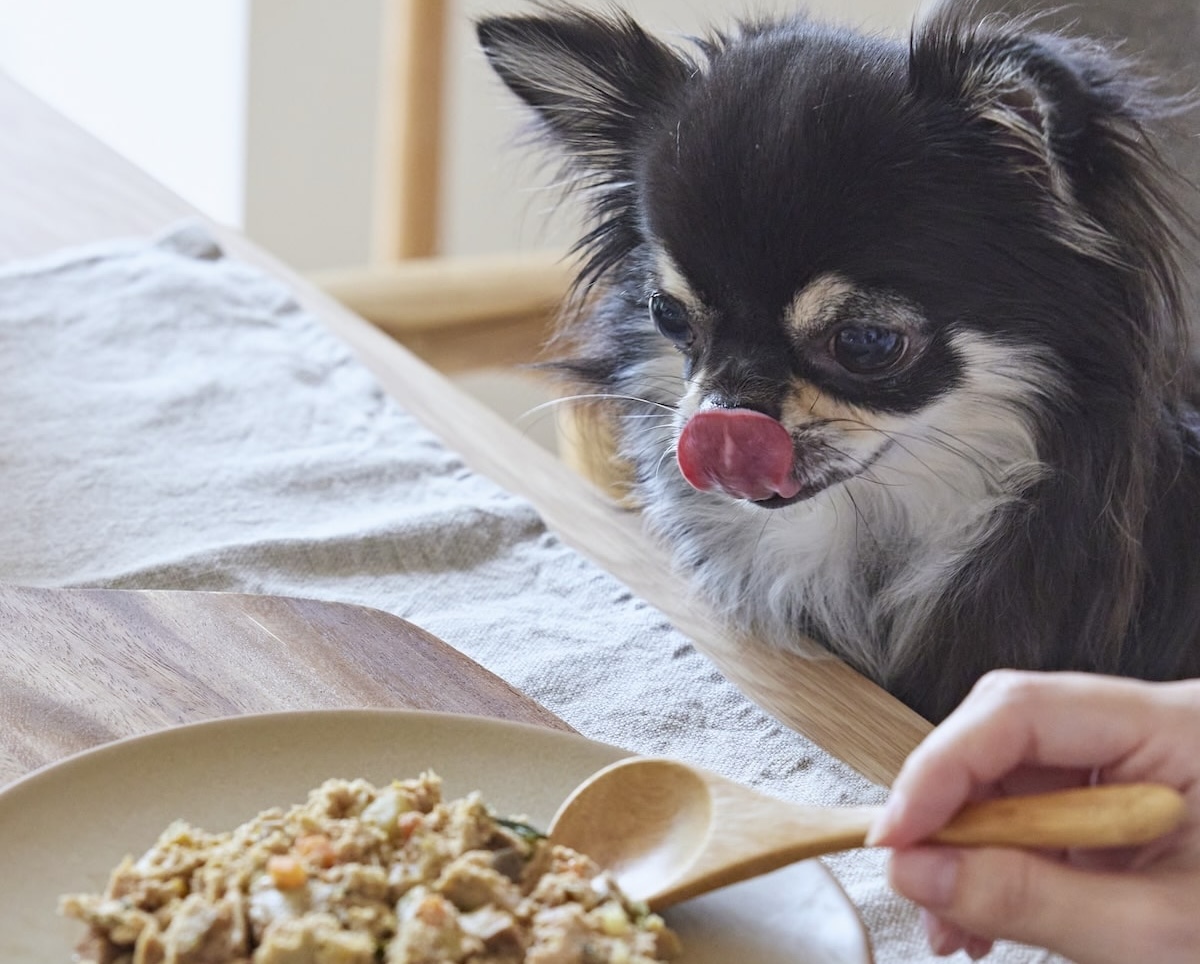
Fresh vs kibble, wet, raw and home-cooked What Is Fresh Dog Food?
Updated 5 November 2026 · CoCo Gourmet editorial team
Fresh dog food is one of the fastest-growing kinds of dog food in Japan, the US and Hong Kong, but the name raises plenty of questions. How is it different from kibble, raw food or cooking at home? Is it worth the price? This guide brings together what we have learned making CoCo Gourmet, the fresh dog food from Japan, so you can decide whether it suits your dog.
In short
Fresh dog food is made from human-grade meat and vegetables that are gently cooked at low temperature and then frozen. Unlike kibble it is not dried at high heat, so it keeps about 70–75% moisture and the aroma and shape of the ingredients. Unlike raw food it is already cooked, and unlike home cooking a complete and balanced recipe does the nutrition maths for you. The trade-offs are freezer space, thawing and a higher daily cost than kibble.
01 What is fresh dog food?
Fresh ingredients, gently cooked and frozen
Fresh dog food (also called fresh cooked dog food) usually means food that has not been dried at high heat into kibble, nor sterilised at high temperature and pressure like cans and retort pouches. Human-grade meat, fish and vegetables are cooked at low temperature, frozen, and delivered to your door frozen.
Because the ingredients are not ground into powder and pressed into pellets, you can still see the pieces of meat and vegetables, and the food keeps more of its aroma, texture and moisture. It looks much closer to a meal you might cook for your dog at home. Below we use CoCo Gourmet as an example to explain how fresh dog food is made, what goes into it and how to store it.
CoCo Gourmet at a glance
- How it is made
- Gently cooked in a human-food factory in Japan, then quick-frozen
- Moisture
- About 70–75%
- Nutrition
- Complete and balanced to AAFCO 2016 standards, vet-supervised
- Additives
- None of these 7: antioxidants, colour fixatives, pH adjusters, preservatives, colourings, seasonings, flavourings
- Grains
- All five main recipes are grain-free
- Storage
- Frozen (−18°C or below) for about 18 months from production
- Pack size
- Individually sealed 100 g packs
Cooked in a factory that makes food for people
CoCo Gourmet is not made in a pet-food plant but in a food factory in Japan that cooks ready meals and side dishes for people. The factory follows HACCP (Hazard Analysis and Critical Control Points): it records the time and temperature of every step from preparing the ingredients to finishing the cooking, cooks the food at low temperature and then quick-freezes it.
Every finished pack goes through five checks before it ships: X-ray inspection, metal detection, sensory testing, visual inspection and microbiological testing.
Mainly meat and fish, no grains
Each of the five main recipes is built around chicken, pork, fish, venison or beef, with vegetables such as sweet potato, pumpkin, carrot, broccoli and beetroot. None of them contain wheat, corn or other grains. Chicken & Vegetables, Pork & Broccoli and Venison & Beets use Japanese meat and vegetables.
| Recipe | Main protein | Calories (per 100 g) |
|---|---|---|
| Chicken & Vegetables | Chicken | 116kcal |
| Pork & Broccoli | Pork | 128kcal |
| Fish & Pumpkin | Pollock, tuna | 105kcal |
| Venison & Beets | Venison, pork | 104kcal |
| Beef & Sweet Potato | Beef, chicken, pork | 102kcal |
Complete and balanced: fresh food and water are enough
Fresh food that is fed as a main meal needs to be complete and balanced. All five CoCo Gourmet main recipes meet the AAFCO 2016 nutrient profiles and are supervised by a veterinarian, a US L.V.T./pet nutrition adviser and a professor emeritus of Hokkaido University, so your dog gets everything it needs from the food and fresh water. Some fresh foods are labelled as complementary or toppers and are only meant to be added to other food, so check the label.
Frozen storage in 100 g packs
Fresh dog food arrives frozen. Put it straight into your freezer (−18°C or below); CoCo Gourmet keeps for about 18 months from production. Each 100 g pack is sealed separately: move the next day's portion to the fridge the night before so it thaws slowly. Unopened packs keep for 7 days in the fridge; once thawed or opened, keep them chilled and use them up quickly.
02 How it compares
Fresh food vs kibble, wet food, raw and home-cooked
Dog food falls roughly into five types. What sets them apart is how the ingredients are processed, which in turn affects moisture, storage, aroma and daily cost.
| Type | How it is made | Moisture | Storage |
|---|---|---|---|
| Fresh food | Fresh meat and vegetables cooked at low temperature, then frozen | About 70–75% | Frozen; thaw the night before |
| Kibble (dry food) | Ingredients ground, cooked and puffed at high heat into pellets | 10% or less | Room temperature; use soon after opening |
| Wet food (cans, pouches) | Sealed in cans or retort pouches and sterilised at high temperature and pressure | About 75% or more | Room temperature; refrigerate after opening |
| Raw food (BARF) | Uncooked meat, organs and bones, often with vegetables | High, varies by product | Frozen; careful hygiene when thawing |
| Home-cooked | Ingredients chosen and cooked by the owner | High | Fridge; cooked as you go |
Moisture figures show general tendencies; check each product label for the actual value.
Fresh dog food vs kibble
To keep at room temperature for a long time, kibble is ground, cooked and puffed at high heat and dried to 10% moisture or less. It is cheaper and easy to store and carry, but your dog gets little water from its food, so fresh water must always be available. Fresh food is not dried, so the meat and vegetables smell stronger and it contains much more water, which makes it easier for dogs that drink little or turn their nose up at kibble. In return it needs a freezer and thawing, and it costs more per day than kibble.
Fresh dog food vs wet food (cans and pouches)
Wet food also contains a lot of water, but to keep at room temperature it is sterilised at high temperature and pressure after being sealed in a can or retort pouch. Some wet foods are complete and balanced and some are toppers only, so read the label. CoCo Gourmet Retort packs use the same ingredients and recipes as the frozen packs but are sterilised so they keep for about 2 years at room temperature; they belong in this group and are handy for travel or when freezer space runs out.
Fresh dog food vs raw food (BARF)
A raw diet feeds uncooked meat, organs and bones, usually with vegetables; it is also called BARF. The key difference is whether the food is cooked. Raw meat needs careful hygiene against bacteria: storage temperature, how you thaw it and how you wash bowls and utensils all matter. Fresh food is cooked, so it keeps much of the aroma of fresh ingredients while being simpler to handle. Raw products may or may not be complete and balanced, so check the label before feeding one as a main meal.
Cooking at home vs ready-made fresh food
Cooking at home lets you choose ingredients your dog likes and know exactly what goes in. But meeting every requirement for calcium, phosphorus, vitamins and trace minerals is hard, and cooking the same few ingredients for a long time can leave gaps. If home cooking will be the main diet, ask a vet or pet nutrition expert to check the recipe and portions. If you add it as a topper, reduce the usual food so total calories do not climb. A complete and balanced fresh food has the nutrition worked out already: thaw, warm and serve. It suits owners who want to feed fresh food but lack the time or confidence to balance it themselves.
03 Pros and cons
4 pros and 4 cons to know before you start
Fresh food made from gently cooked, frozen ingredients has strengths that kibble does not, but storage and price need some thought.
Pros
- Strong aroma, easier for picky eaters. Because it is not dried at high heat, the smell of the meat and vegetables stays in the food, and warming it to about body temperature brings it out even more.
- Lots of water with every meal. Kibble is 10% water or less; CoCo Gourmet main recipes are about 70–75%, which helps dogs that do not drink much.
- You can see the ingredients. Nothing is ground into pellets, so you can check with your own eyes what your dog is eating. CoCo Gourmet frozen packs contain none of the 7 additives listed above.
- Already cooked, just warm and serve. No shopping, nutrition maths or cooking, as long as the product is complete and balanced.
Cons
- Needs freezer space. It must stay frozen, so a large order may not fit. CoCo Gourmet comes in flat 100 g packs, and you can change how often and how much is delivered by contacting us before the next shipment is confirmed.
- Needs thawing. Move the next day's portion to the fridge the night before. If you forget, you can thaw it in hot water or the microwave.
- Use it up quickly once thawed. It cannot be left out for long like kibble.
- Costs more per day than kibble. Human-grade ingredients, low-temperature cooking and frozen delivery cost more. To keep costs down, start by using it as a topper on kibble (about a quarter of the daily amount).
04 How to choose
6 things to check before you buy fresh dog food
Brands differ in what goes in, how it is stored and what it costs, so look past the packaging and check these six points. If your dog eats its current food well and is in good health, there is no need to rush a change. If your dog is ill or under treatment, talk to your vet before switching.
- 1Complete and balanced, or a topper?
- For a main meal choose food labelled complete and balanced, for example to AAFCO standards. Food labelled complementary, supplementary or as a topper is meant to be fed with other food.
- 2Are all ingredients listed?
- Ingredients are listed by weight, heaviest first. Check that meat or fish comes first and that every ingredient is named. Some brands also publish where the ingredients come from.
- 3Additives
- Check whether preservatives, colourings or flavourings are used. If the pack only says additive-free, look at which additives it actually leaves out.
- 4Storage and space
- Frozen or chilled, how long it keeps, and how soon it must be used after thawing or opening. Look at the pack size and shape to see whether it will fit in your freezer.
- 5Cost per day
- Fresh food is high in water, so it has fewer calories per 100 g than kibble. Compare the cost per day (or per 100 kcal) rather than the price per pack: work out the daily amount for your dog's weight, then add any delivery charges.
- 6Trial and money-back guarantee
- Can you buy a small amount to try? Does a trial turn into a subscription automatically? Is there a refund if your dog will not eat it, and for how long?
How CoCo Gourmet measures up
All five CoCo Gourmet main recipes are vet-supervised and complete and balanced to AAFCO 2016 standards. The frozen packs contain no antioxidants, colour fixatives, pH adjusters, preservatives, colourings, seasonings or flavourings, keep for about 18 months frozen and come in 100 g packs. Delivery is frozen and free to every district in Hong Kong, normally within 3–5 working days. To try a small amount, a one-off 4-pack is HK$200. A 12-pack subscription is HK$330 (54% off, HK$27.5 per pack); if your dog does not like the first box you can get a full refund within 7 days, and you can cancel at any time.
05 How to feed
Serve fresh food in 4 steps, and switch slowly
-
01
Freeze as soon as it arrives. Store at −18°C or below.
-
02
Move tomorrow's portion to the fridge the night before. Let it thaw slowly in the fridge (10°C or below) so it is ready to serve.
-
03
Measure the portion and warm it to about body temperature. Bring a pot of water to the boil, turn off the heat and wait about 5 minutes, then soak the pack for about 1 minute (about 5 minutes if still frozen). Or microwave at 500 W for about 90 seconds per 100 g; if heating in the pack, cut a small opening first and place it on a heat-proof dish.
-
04
Break it up and serve. Split an adult dog's daily amount into two or more meals.
Switch over 1–2 weeks
Changing everything at once can upset the stomach. Start by mixing fresh food into the usual food, about half and half for the first week, and watch the stools. If they are firm and the food is well digested, increase the share step by step. Dogs with sensitive stomachs can take about two weeks.
Set the daily amount by calories
Because fresh food contains so much water, your dog needs a greater weight of it than of kibble to get the same calories. The daily amount depends on weight, age, body condition and activity; the CoCo Gourmet feeding calculator works out daily calories as 70 × body weight (kg)^0.75 × a life-stage factor. When you use it as a topper, cut the kibble back so the daily total stays the same.
Other ways to use it
- As a topper: put a little on your dog's usual kibble to change the smell and texture. About a quarter of the daily amount is a good guide; reduce the kibble to match.
- As a reward: a small amount after a walk or training, counted as part of the daily amount.
- To give medicine: mix or wrap powder or tablets in a little fresh food. Ask your vet first whether the medicine can be given with food.
If your dog will not eat it
- Warm it up. Cold food straight from the fridge has little smell. Warm it to about body temperature and check with your finger that it is not hot.
- Start as a topper. Add a little to the usual food and increase the share over 1–2 weeks. Offering a little from your hand also helps.
- Try another protein. Some dogs prefer certain meats or fish. CoCo Gourmet has five recipes: chicken, pork, fish, venison and beef.
- Rotate and cut back on treats. Dogs can tire of the same flavour, and lots of treats lead to leftovers.
If your dog is listless, or diarrhoea or vomiting continues, see your vet before trying to change the food.
06 FAQs
Fresh dog food FAQs
- What is the difference between fresh dog food and raw dog food?
- The key difference is cooking. Fresh dog food is fresh meat and vegetables cooked at low temperature and then frozen; raw dog food is uncooked meat, organs and bones. Raw meat needs careful hygiene against bacteria (storage temperature, thawing, washing bowls and utensils), whereas fresh food is already cooked, so you just thaw, warm and serve. Both come in complete and incomplete versions, so check the label before feeding either as a main meal.
- Can fresh dog food be my dog's main diet long term?
- Yes, as long as you choose a complete and balanced product. Complete foods are formulated to nutrient standards such as AAFCO, so your dog gets everything it needs from the food and fresh water. All five CoCo Gourmet main recipes meet AAFCO 2016 standards and can be fed every day as the main meal; fresh foods labelled as toppers or complementary should only be added to other food.
- Can I mix fresh food with kibble?
- Yes. Many owners add fresh food on top of kibble, or mix the two while switching. Work it out by calories and reduce the kibble to match so the daily total does not go up. When using CoCo Gourmet as a topper, about a quarter of the daily amount is a good guide.
- How should fresh dog food be stored, and how long does it keep?
- For CoCo Gourmet: put it in the freezer (−18°C or below) when it arrives, where it keeps for about 18 months from production. Move the next day's portion to the fridge the night before; unopened packs keep for 7 days in the fridge, and once thawed or opened they should be kept chilled and used quickly. For other brands, follow the label.
- How many grams of fresh food does a dog need a day?
- Work out the calories your dog needs from its weight, age, body condition and activity, then divide by the calories per 100 g of the food. Because fresh food is high in water, the weight will be greater than for kibble. Enter your dog's weight and age in the CoCo Gourmet feeding calculator for an instant figure in grams; the page also has daily feeding tables by weight for adults, seniors and puppies.
- Can a dog with an illness or a chronic condition eat fresh food?
- If your dog is under treatment or has a chronic condition, ask your vet before changing its food, because some conditions require limits on protein, phosphorus or fat. The five CoCo Gourmet main recipes are complete everyday food, not therapeutic diets. We also make the vet-supervised CoCo Gourmet Care range (Early Kidney Care, Low-fat Digestive Care, Skin & Coat Care); please talk to your vet before using it.
- Where can I buy fresh dog food in Hong Kong?
- Fresh dog food has to stay frozen, so most brands sell through their official websites with frozen delivery, and some pet shops and vet clinics stock it in a freezer. CoCo Gourmet can be ordered on our official website with free frozen delivery to every district in Hong Kong, normally within 3–5 working days. You can also find stockists on our store list; check stock before you go.
- Why does fresh dog food cost more than kibble?
- Fresh food uses human-grade meat and vegetables, is cooked at low temperature in a human-food factory, quick-frozen and shipped frozen, so ingredients, production and delivery all cost more than shelf-stable kibble. Compare prices by the cost per day. To keep costs down, you can start by adding fresh food on top of kibble (about a quarter of the daily amount).
Hong Kong stockists More questions about ordering and delivery
About CoCo Gourmet
CoCo Gourmet is fresh dog food made by Biophilia Inc. in Japan, and has been No.1 in sales among fresh pet food brands sold mainly online in Japan for four years running*. The five main recipes are vet-supervised, complete and balanced to AAFCO 2016 standards and made in a human-food factory in Japan, then delivered frozen in 100 g packs across Hong Kong.
* Survey of sales from fiscal 2022 to 2025 among companies selling mainly online, by TPC Marketing Research Corporation. Fresh pet food here means pet food that has not been dried or retort-processed.